
(What Educators Need to Know to Truly Prepare the Next Generation)
When I walk into a high school these days, whether it’s for a classroom talk, a career fair, or a one-on-one meeting with a senior thinking about life after graduation, I can feel the tension in the air. Everyone’s focused on grades, transcripts, GPAs, and college applications like they’re the holy trinity of success.
But the moment I step back outside those doors and into the real world, the world where companies hire, industries innovate, and careers are built or broken, I see something completely different:
A workforce starving for discipline.
A job market desperate for accountability.
Employers begging for young people who can lead, communicate, solve problems, show up on time, and handle pressure without folding.
There’s a shocking disconnect, a canyon-wide gap, between what schools teach and what the job market actually demands.
And here’s the part nobody wants to say out loud:
We’re not preparing kids for the world they’re walking into.
We’re preparing them for a world that doesn’t exist anymore.
This isn’t an attack on teachers. This isn’t anti-education. This isn’t a “schools are failing” rant. This is a wake-up call. Because for many students, you; the teacher, the counselor, the coach; are the only adult in their life telling them the truth about what comes next.
And right now, the truth is this:
The modern workforce doesn’t want perfect students. It wants capable adults.
The Graduate Who Wasn’t Ready
A few years back, I sat across from a kid named Marcus. Smart. Kind. Polite. Honor roll student. Perfect attendance. He did everything “right.” His teachers loved him. His parents were proud of him. His transcript looked like a recruiting poster for college admissions.
But when I asked him what he wanted to do with his life, his eyes dropped to the floor.
“I don’t know,” he said. “I never really thought about it.”
I pressed a little deeper.
What are you good at? What do you enjoy? Where do you see yourself in 5 years?
Nothing. Blank slate. Zero direction.
And it hit me:
We had spent 12 years teaching him how to survive school…
…but not how to survive adulthood.
He could pass a test. He could write an essay. He could memorize the right answers.
But he couldn’t answer the most important question of all:
Who are you becoming?
Marcus wasn’t broken. He wasn’t lazy. He wasn’t unmotivated.
He was unprepared.
School had prepared him to comply… not compete.
To memorize… not master.
To perform… not produce.
And that’s when I realized something painful:
Most of our “successful” students are only school-successful, not life-successful.
They’re achieving academically but underdeveloped professionally.
They’re graduating with diplomas but not direction.
They’re walking across a stage… and straight into a world they haven’t been trained to navigate.
Schools Teach Knowledge; The Job Market Requires Capability
Here’s the truth educators feel, but don’t always say out loud:
Knowledge isn’t the currency anymore.
Capability is.
Employers assume knowledge is Google-able.
Skill is what can’t be faked.
Here’s what the modern workforce is desperately looking for:
- Discipline
- Reliability
- Initiative
- Communication
- Leadership
- Problem-solving
- Emotional maturity
- Adaptability
- Ability to work under pressure
- Accountability
Sound familiar?
These aren’t math or English standards. They’re life standards.
And ironically, the institution delivering these at scale; consistently, reliably, without shortcuts; isn’t a school.
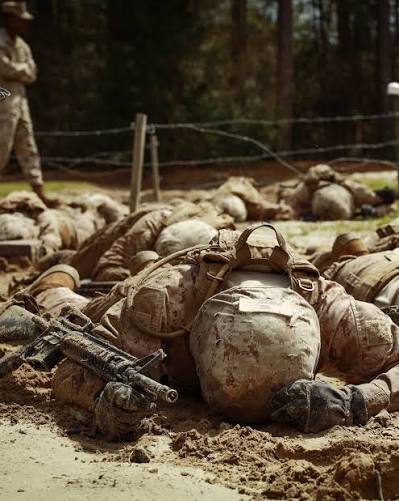
It’s the military.
Not because kids join to “grow up,” but because the environment forces it.
Every adult in education knows this:
Students don’t rise to expectations. They rise to standards.
But the modern school system has been slowly stripped of the tools required to enforce those standards.
You’re expected to teach, nurture, mentor, counsel, regulate behavior, administer tests, follow shifting policies, manage classroom technology, differentiate instruction, and somehow keep teenagers emotionally stable, all at the same time.
It’s not a teacher failure.
It’s a structural failure.
And students are paying the price for it.
The Real-World Employer Doesn’t Care About GPAs
This part stings, but stay with me.
I meet business owners, hiring managers, supervisors, and industry leaders in every community I travel to. Manufacturers. Tech companies. Trade professionals. Healthcare teams. Logistics. Aviation. Maintenance. Cybersecurity. Retail. Hospitality. You name it.
When I ask them what they wish schools taught, I hear the same thing almost word-for-word:
“I don’t care about GPA. I need people who show up, work hard, communicate, and solve problems.”
They’ll train the technical skills.
They’ll teach the specifics.
They’ll provide the certifications.
What they can’t do, what they’re tired of doing, is teaching basic adulthood.
Here’s what employers tell me constantly:
“Kids can’t handle confrontation.” “Kids can’t take feedback.” “Kids crack under pressure.” “Kids ghost jobs after a week.” “Kids fall apart the second something doesn’t feel easy.” “Kids don’t know how to think, only how to follow instructions.”
And to be fair… they’re not wrong.
Because most students have never experienced a structured environment that requires accountability.
They’ve never been pushed past their comfort zone. They’ve never been challenged to think beyond the rubric. They’ve never had standards enforced consistently and without apology.
And because schools are overloaded, burned out, and boxed in by systems designed two decades behind today’s economy, teachers often feel like they’re trying to build a house with half the tools missing.
What the Job Market Actually Demands (That Schools Stop Teaching Around 8th Grade)
Let’s break this down with brutal honesty:
1. Problem-Solving Over Memorization
Employers want doers.
Thinkers.
Problem-solvers.
But schools often reward compliance over creativity.
The job market rewards initiative.
School punishes it if it breaks the rubric.
2. Leadership and Communication
Today’s workforce is begging… begging, for strong communicators and team-oriented leaders.
Yet most students spend more time learning to avoid eye contact than make it.
Leadership shouldn’t be a club.
It should be a curriculum.
3. Emotional Resilience
This is the big one.
Companies need young people who can:
- handle correction
- manage stress
- work under pressure
- adapt to change
- face challenge without shutting down
But when schools soften every edge, pad every landing, and remove every hard moment… students graduate fragile.
4. Work Ethic and Discipline
Every employer I talk to says the same sentence:
“I can’t teach work ethic.”
You know who teaches it?
Experience. Challenge. Responsibility. Accountability.
But most of our students aren’t required to hold any of that.
5. Hands-On Experience
Apprenticeships. Internships. CTE pathways. Trade exposure. Real-world problem-solving.
These are the ticket to job readiness.
But many schools still treat career pathways like a “Plan B” option instead of a primary route to success.
How the Military Quietly Fixes the Gap (Whether Students Serve or Not)
Let me be crystal clear:
Not every kid needs to join the military.
But every kid would benefit from military-level development.
I’m not talking about boot camp.
I’m talking about:
- Clear standards
- Real accountability
- Pressure-tested confidence
- Leadership development
- Structure
- Purpose
- Time management
- Self-discipline
- Communication skills
- Mission-focused teamwork
Military service takes an 18-year-old and forces them to grow into a capable adult faster than any classroom ever could.
You know why?
Because the real world doesn’t care about excuses.
Neither does the military. And neither does the job market.
We’re living in a time when young people desperately need something most institutions can’t give them anymore:
A rite of passage.
A moment where they move from adolescence to adulthood. A challenge that introduces them to their own strength. A test that reveals their capability. A standard that shapes their identity.
Educators see the need every day. Counselors feel it in their meetings. Teachers notice it in the classroom.
The military just happens to be one of the only places still producing it at scale.
Students Aren’t Underachieving, They’re Undersupported
Here’s the part I want every educator to hear clearly:
Students aren’t failing because of you.
They’re failing because the system has removed the very things that build resilient adults.
You’re doing everything you can with the time, tools, and policies you’re given.
But there’s a growing list of things teachers can’t legally do anymore:
- Enforce consequences consistently
- Require responsibility
- Demand accountability
- Teach discipline
- Challenge students aggressively
- Introduce high-pressure moments
- Push kids out of their emotional comfort zone
And without those things?
Students stay soft.
Not weak. Not broken. Just untested.
And untested kids struggle when real life hits back.
The Real World Has Standards That Schools Can’t Simulate
This is the disconnect:
Schools teach content. The job market demands character.
Schools reward performance.
The job market rewards capability.
Schools measure compliance.
The job market measures initiative.
Schools prepare kids for tests.
The job market prepares them for pressure.
And here’s the painful, unavoidable truth:
The workforce assumes graduates are adults. But many graduates have never been required to act like one.
That’s the real danger. That’s the real crisis. That’s the real disconnect.
So What Can Educators Do? (The Actionable Part You Can Implement Tomorrow)
You’re not powerless.
In fact, you’re the most important part of the solution.
Here’s how teachers, counselors, and educators can bridge the gap immediately:
1. Teach Decision-Making, Not Just Direction-Following
Stop giving answers.
Start giving scenarios.
“What would you do?”
“Why would you do it?”
“How would you handle the consequences?”
Make them think, not just comply.
2. Introduce Pressure, Not Avoid It
Controlled stress is training.
Avoided stress is weakness.
Group projects with deadlines.
Public speaking.
Peer leadership.
Critical thinking under time constraints.
They need this.
3. Encourage Career Exploration Earlier
Don’t wait until senior year.
Freshmen should know the difference between:
- trades
- college
- military
- certifications
- apprenticeships
- technical schools
- entrepreneurship
Exposure creates direction.
4. Promote Discipline and Accountability
Even within the limits you face:
Deadlines matter.
Communication matters.
Showing up matters.
Effort matters.
You can enforce these.
5. Partner With Organizations That Teach Real-World Skills
Career centers.
Trade unions.
Local businesses.
Military recruiters.
Community mentors.
STEM programs.
Bring the real world into the school.
6. Reframe Leadership as a Skill, Not a Title
Leadership shouldn’t be reserved for student council or the “top” kids.
Every student needs leadership training.
Every. Single. One.
If We Don’t Teach Them Now, Life Will Teach Them Later… and Far More Brutally
The world is changing faster than schools can keep up.
Technology evolves.
Industries shift.
Careers emerge and disappear overnight.
But one thing never changes:
Character always wins. Capability always wins. Discipline always wins. Resilience always wins.
And those are the exact things too many students graduate without.
If you’re a teacher, counselor, coach, or educator, hear this from someone who sees the gap every single day:
You aren’t just preparing students for graduation.
You’re preparing them for adulthood.
Not the adulthood you grew up with.
The adulthood they’re inheriting, one full of competition, complexity, and pressure.
Our kids don’t need more comfort. They need more challenge.
They don’t need more worksheets. They need more responsibility.
They don’t need more grades. They need more grit.
Because the job market isn’t asking for the next generation of perfect students.
It’s asking for the next generation of capable adults.
And you, more than anyone, are the bridge that will get them there.
 The Career Recruiter
Leave a comment